1946 Madrid student armed uprising plan and its failure
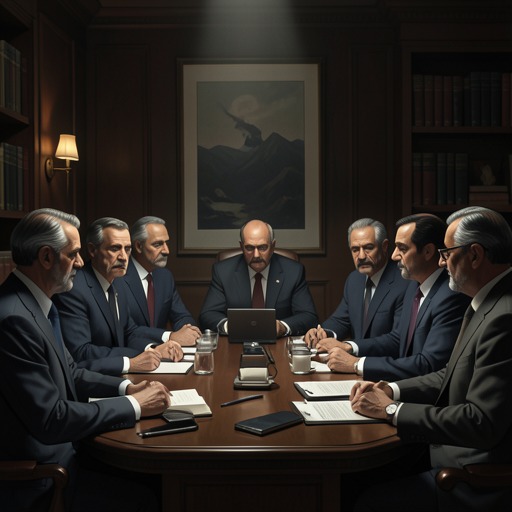
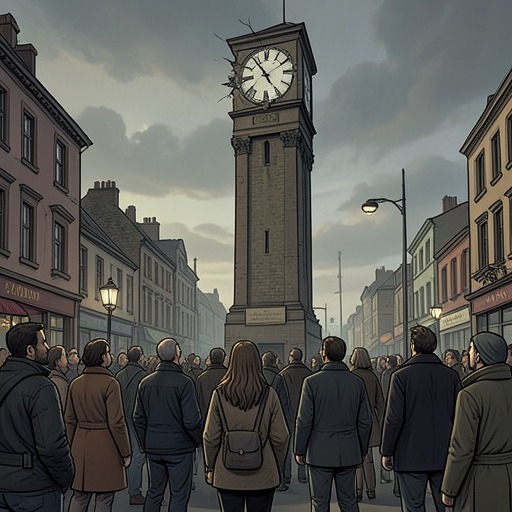
Los pacientes del doctor GarcíaThe 1946 Madrid student armed uprising plan and its failure expose the gulf between young resisters’ confidence in Allied intervention and the political isolation that left Franco in power. On 12 December, Manuel Arroyo Benítez finds students prepared to take up arms after the United Nations has not acted against the dictatorship. He persuades them to abandon the plan and go home; as police pursue other students through central Madrid, Arroyo is shot and forced into hiding. The planned seizure never occurs, but the episode makes the students’ courage, their exposure to danger, and the cost of misplaced hope impossible to separate.
Causes and Expectations
The uprising belongs to the broader postwar resistance described as a story of faith and failure. After the Allied victory in the Second World War, young Spaniards convinced themselves that the defeat of the Axis would bring down Franco as well. Their hope had a specific political trigger: they expected the United Nations to intervene decisively on behalf of Spanish democrats. The plan was to take the Communications Palace at Cibeles by force at the moment that intervention came.
The students were not seasoned fighters. They were very young men and women, including students, apprentices, and young workers, many from middle-class families impoverished by their Republican past. Some had been children during the war and had little political experience. Their decision to resist was therefore not a continuation of a long, organized military career but a conscious and costly commitment made in expectation that international events would open a way to change Spain.
The wider novel places their hope against a history of failed promises and political isolation. Arroyo had spent years gathering information for the Spanish Republic in exile, enduring encounters with people whose professions of sympathy and solemn commitments proved empty. Pablo de Azcárate had refused his request to be relieved, insisting that he was needed to keep pressure on until the war ended. Even the exclusion of Francoist Spain from the founding of the United Nations in 1945, and the presence of Republican politicians as observers, did not persuade Arroyo that the international order would deliver liberation. The students’ expectation of intervention thus confronts a skepticism already learned through experience.
The Armed Plan
The narrative locates the crisis in Madrid on 12 December 1946. Arroyo enters a bar, glad that he has bought a navy-blue overcoat, orders coffee and brandy, and asks to use the telephone. The ordinary details of the scene frame the moment before he meets the students: the resistance’s decisive hour arrives not as a public military operation but through a conversation, a call, and the effort to keep young people from exposing themselves to arrest or death.
Arroyo’s available contact in Madrid had come from Azcárate. Through Paco Contreras, a former Socialist Party entertainment columnist now scraping by as a proofreader, he had met Ramón Mateos, a third-year Industrial Engineering student. Ramón’s family circumstances embodied the pressures surrounding the students’ politics: his father had died before the war, a brother had been killed at Brunete, another was serving a prison sentence in a penal detachment, and his sister worked cleaning houses by the hour so that he could study. A Franco scholarship, awarded for his academic record and secured through an uncle who had served as a military chaplain on the victorious side, tormented him rather than reconciling him to the regime.
Ramón and the young people around him formed the right wing of an assault group preparing to seize the Communications Palace. Four boys sat with him on the last bench of the Paseo de Recoletos; six or seven more were nearby. When Arroyo reached them, he greeted them as though they had arranged to meet and urged them to take a walk. Ramón rose when Arroyo took his arm, moving with the docility of a small child but saying nothing as they went up Calle Alcalá. Arroyo could tell that the students already knew the news he had come to deliver. Relief that he would not have to tell them was inseparable from the feeling that his heart was breaking.
Abandonment and Withdrawal
Arroyo tried to give the students a way out without belittling what they had risked. He told them that no one could fault their bravery, but that the cause would gain nothing from their arrest. They should go home separately and without attracting attention; the resistance could not afford to lose young people like them. Ramón, rigid and staring toward the horizon, finally asked how they could have been treated this way and why they had been let down. Arroyo’s answer was not a promise of rescue: they had always been alone, he said, and would remain so. The encounter makes the failure of international intervention a personal fact, heard in the students’ bewilderment and in the older operative’s inability to offer them a remedy.
Their weapons made the threatened action concrete. The students carried pistols that had belonged to parents, siblings, and neighbors, weapons Republican soldiers had refused to surrender in April 1939 and that the young people had retrieved from trunks, spaces beneath loose floor tiles, and household cisterns. Juanma Gómez, a history student and Ramón’s close friend, also carried two grenades found in the boot of a wardrobe. Arroyo could not stop thinking about them. When Juanma asked why the group should obey him and who he was, Arroyo revealed part of his history: he had worked for Republican intelligence during the war and had served at the embassy in London, where he fought the Non-Intervention Committee and lost repeatedly. He invoked experience, not rank, to persuade the students to trust his judgment.
Arroyo told them to return home, find the others, and get as many as possible to safety; he promised to seek them out again in a few days. He had already noticed other armed groups around central Madrid, their presence betrayed by Ramón’s and Juanma’s nervous glances toward young men standing on pavements and by metro entrances. He could not reach everyone. At Calle Barquillo he parted from the group, still trying to send them away before the police could find them.
Gunfire and Consequences
The crisis does not end with a successful dispersal. Halfway along Calle Barquillo, Arroyo saw a group of boys he did not know running in the roadway and heard gunshots. A half-dozen police officers were still some distance behind the students, who returned fire while continuing to run. Arroyo then felt a burning bite on the right side of his body. He took shelter in a doorway and watched from behind its partly open door as the police ran past; their shouts grew more distant, then stopped. He stayed crouched in place until two women emerged from a doorway across the street. Before he could cross, he heard the screams of a mutilated man, breaking a silence that seemed to leave his voice alone in the world.
The armed uprising intended to seize the Communications Palace does not take place. Instead, the hoped-for intervention has failed, the students are scattered, and Arroyo is wounded while trying to prevent their capture. In the book’s account of the day, the students’ struggle does not end with this aborted action: those who remain continue fighting, and their sacrifice is not erased by the plan’s failure. The episode’s reversal is stark: the young resisters had prepared to act at the instant the United Nations would move against Franco, but the decisive action becomes Arroyo’s attempt to get them out alive.
Significance in the Narrative
The failed plan is the practical and emotional answer to the resistance’s postwar expectation that the defeat of the Axis would also end Franco’s rule. In the novel’s wider account, students listen eagerly to the BBC, make bombs that fail to explode, form relationships amid clandestine leafleting, and retrieve old weapons in preparation for an armed rising. The date 12 December 1946 marks the collapse of the particular opportunity they had built their plan around; it does not make their commitment disappear.
For Arroyo, the scene joins two forms of disillusionment. Years of diplomatic work had taught him to distrust professions of solidarity, while his meeting with Ramón and Juanma obliges him to protect young people who still believe that their courage might be met by action from abroad. His appeal to his Republican intelligence service record briefly establishes why he knows the danger, but it cannot restore the authority or protection the students lack. The episode gives the political failure a human measure: inherited pistols and hidden grenades lead not to the liberation of Madrid but to a retreat through its streets, a wound in Arroyo’s side, and the unanswered shock of students discovering that the promised help has not come.